





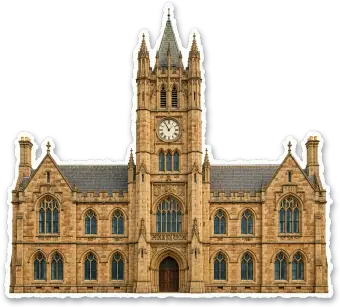
The University of Queensland (UQ) selects Doctor of Medicine (MD) students with a live multiple mini-interview (MMI) on Zoom: 8 stations, each with 2 minutes of silent reading and 7 minutes to answer, and a different interviewer at each. For 2027 entry, UQ says high school graduate interviews will be held in mid-to-late November 2026. Graduate entry interviews for 2027 entry were held in September 2026, and 2028-entry dates are not published yet.
UQ MMI at a glance
| Item | Detail | Source |
|---|---|---|
| Program | Doctor of Medicine (MD), 4 years full time | UQ program page |
| Entry types | Provisional entry (current Year 12 students, first attempt) and graduate entry (degree holders, via GEMSAS or direct to UQ) | UQ MD provisional entry, UQ graduate entry |
| Who is invited (provisional) | Based on UCAT ANZ aggregate score. At least 50% of domestic Greater Brisbane invitees are Queensland Year 12 students. Lowest UCAT ANZ to be invited for 2026 entry: 2290 (non-rural) and 1960 (Rural Background Sub-quota) | UQ entry requirements |
| Who is invited (graduate) | 50:50 mix of GPA and unweighted average GAMSAT score | GEMSAS – UQ |
| Interview type | Multiple mini-interview (MMI); no acting or role-play stations | UQ pre-interview briefing pack (V2.2 2026) |
| Stations | 8 scenario stations, one interviewer each | Briefing pack (V2.2 2026) |
| Timing per station | 2 minutes silent reading, then 7 minutes to respond (reminder at 6 minutes), about 1 minute to move between stations | Briefing pack (V2.2 2026) |
| Total time | Keep up to 2 hours free and be alone and undisturbed | Briefing pack (V2.2 2026) |
| Format | Live, online by video conference | UQ entry interviews |
| Platform | Zoom | Briefing pack (V2.2 2026) |
| Interview link | Emailed 1 to 2 weeks before your interview | UQ entry interviews |
| Provisional entry dates (2027 start) | Direct applications closed 30 September 2026; invitations mid-to-late October 2026; interviews mid-to-late November 2026; direct-applicant offers mid-December 2026; QTAC offer round 14 January 2027 | UQ MD provisional entry, QTAC 721302 |
| Graduate entry dates (2027 start) | GEMSAS: interviews mid-September 2026, offers from November 2026. Direct-to-UQ: interviews week of 13 July 2026 (round 1) and 14 September 2026 (round 2) | UQ graduate entry, GEMSAS – UQ |
What does UQ look for?
UQ says its MMI assesses "personal qualities and values". The four qualities it names are kindness and compassion, integrity, adaptability and verbal communication skills (UQ entry interviews).
These match the six themes the MD is built around, which include "Kind and Compassionate Professional", "Partner and Team Player", "Safe and Effective Clinician" and "Advocate for Health Improvement" (UQ MD curriculum). An article from the admissions team of UQ's partner program with Ochsner (US) adds that the MMI does not test science knowledge and that they are "not looking for rehearsed answers" (UQ-Ochsner, May 2025).
What this means for your answers:
- Kindness and compassion: think about how each person in the scenario feels, not only what the rules say.
- Integrity: be honest about what you would do, even when it is uncomfortable. Admit when you would need help.
- Adaptability: when the interviewer adds a new detail, adjust your answer calmly instead of defending your first view.
- Communication: speak clearly, in order, and check that your answer actually addresses the question asked.
The briefing pack says you are marked on the quality of your answer, not its length, and you do not lose marks for finishing early.
How does the UQ MMI day work?
Based on UQ's pre-interview briefing pack (V2.2 2026):
- Before the day. Book your time by the deadline in your invitation (QTAC applicants book with UQ; GEMSAS applicants must accept in the GEMSAS portal and book with UQ). When you book, you agree not to share MMI content. UQ also runs an optional, unrecorded online briefing session.
- Set up your room. You need a computer or tablet, a webcam you can move around the room, a microphone, speakers, screen sharing and the latest Zoom with gesture recognition turned off. Only Zoom can be open. You may have water, but no notes or writing materials.
- Join on time. Use the link in your "Zoom Link and Briefing" email. Late entry is not allowed once interviews start. Your Zoom name must match your application.
- Technical check. A staff member checks your audio, video and screen sharing.
- ID and room check. At Station 1, the interviewer checks your government photo ID. You then show your room with the camera, including above and below your desk.
- Read. The scenario appears on screen for 2 minutes of silent reading.
- Answer. The scenario is taken off the screen and you have 7 minutes to respond to the questions and any further prompts from the interviewer. A message appears at 6 minutes.
- Move on. You are moved to the next station, about a minute later. This repeats for all 8 stations.
- Finish. You wait in a virtual waiting room until staff tell you to leave.
Keep your camera on and your hands visible the whole time. If your connection drops, rejoin within your time slot; you will be rechecked but not given extra time.
UQ MMI questions: common themes
UQ does not publish its stations, and candidates agree to keep them confidential. From UQ's own descriptions, you can expect:
- Ethical dilemmas – situations where doing the right thing is not simple, such as honesty, fairness or confidentiality.
- Social and health issues – fairness in healthcare and issues affecting communities.
- Difficult conversations with people – how you would handle a tense or upsetting interaction.
- Personal qualities – how you deal with pressure, change, mistakes and working with others.
- Follow-up prompts – the interviewer may add details or ask you to go further within the 7 minutes.
There are no acting or role-play stations at UQ. Everything is answered directly to the interviewer.
Example (new question written by m.i ready, not from UQ): "You volunteer at a local sports club. Before a final, a teammate tells you they have felt dizzy and short of breath at the last two training sessions. They ask you not to tell the coach because they don't want to miss the game. What would you do?"
A strong answer covers:
- The main concern: the teammate's safety comes first, but their trust and wishes matter too.
- Talking with the teammate privately and kindly, finding out more, and encouraging them to see a doctor before playing.
- Being honest that if they refuse and the risk seems real, you may need to tell the coach, and explaining why.
- Offering practical help, such as going with them to an appointment or helping them talk to the coach.
- Staying calm if the interviewer adds a twist (for example, the teammate collapses at training), and changing the plan to match.
- A short closing line showing what this says about responsibility to others.
How to answer "Why UQ?"
Generic praise does not help. These are specific features you can link to your own experiences:
- Rural and regional training. UQ has two regional MD pathways. The Central Queensland–Wide Bay pathway is based in Rockhampton and Bundaberg, with options in Hervey Bay and (in future) Gladstone. The Darling Downs–South West pathway is based in Toowoomba (UQ rural pathways). UQ sets aside 28% of new domestic MD places for students from a rural background (UQ Rural Background Sub-quota).
- Learning communities. In first year you join a local "learning community" that acts as your clinical home for the whole degree (UQ MD curriculum).
- Early clinical contact. Year 1 includes one day a week of clinical experience, rising to four days a week in Year 3. The final semester is a "transition to practice" term working as a pre-intern on a clinical team.
- Research and choice. Research skills run through the degree, with options such as the Summer and Winter Research Program (UQ MD).
- Indigenous and rural health. Both are built into the curriculum, with options to study them in more depth.
If you are applying through a regional pathway, be ready to explain your link to that region and why you want to work there.
Common mistakes in the UQ MMI
- Not holding the scenario in your head. The scenario disappears after the 2 minutes of reading, and you cannot write notes. Use the reading time to fix the key people, the problem and the question in your mind.
- Running out of things to say, then panicking. Seven minutes is long. If you finish early, that is fine; UQ says you will not lose marks. Do not pad with repetition.
- Treating follow-up prompts as a sign you were wrong. New details test adaptability. Take a breath and adjust.
- Ignoring the online setup. A fixed desktop webcam, a messy room, other windows open or a name in Zoom that does not match your application can all cause problems on the day.
- Giving a "correct" answer with no warmth. Kindness and compassion are named qualities. Show that you have thought about how people feel.
Free practice.
You can practice with a free half mock interview based on the UQ format, with timed reading and answer stages: see how our mock interviews work. It is a good way to test your room setup and timing before the real day.
Your coach
Taught by current medical students who have sat these interviews. Every m.i ready coach has been through a medical interview recently, got in, and still remembers the nerves. Sessions are one-on-one, online and built around your university's real format, with a written summary after every lesson.
Meet the coaches · How coaching works · Compare coaching packages · Book a free 15-minute call
UQ MMI FAQs.
What are UQ MMI questions like?
UQ does not publish its stations, and candidates agree to keep them confidential. From UQ's own descriptions, expect ethical dilemmas, social and health issues, difficult conversations, and questions about your personal qualities, with follow-up prompts from the interviewer. There are no acting or role-play stations: you answer every scenario directly to the interviewer. Try the 45 MMI practice questions to get used to the style.
How many stations are in the UQ MMI?
Eight. UQ's briefing pack says all applicants address 8 scenarios. Some rounds show a "Station 9 – Waiting Room", but this is not a scenario (briefing pack).
Is the UQ MMI online or in person?
Online. UQ holds its MMIs by video conference, and the briefing pack confirms Zoom is used. You need a moveable webcam and a quiet room where you will be alone (UQ entry interviews).
When will I hear if I have a UQ interview?
For 2027 provisional entry, UQ says direct applicants receive invitations in mid-to-late October 2026, with interviews in mid-to-late November 2026. Your Zoom link arrives 1 to 2 weeks before your interview, so check your junk mail.
What UCAT score do I need for a UQ interview?
There is no fixed cut-off; it changes each year. For 2026 entry, the lowest score invited was 2290 for non-rural applicants and 1960 for Rural Background Sub-quota applicants. UQ is reviewing how it will use the UCAT ANZ score after recent test changes (UQ entry requirements).
Are there role-play stations in the UQ MMI?
No. UQ's briefing pack says it does not currently use acting or role-play stations.
Can I take notes during the UQ MMI?
No. Writing materials, notes, recording and screenshots are not allowed. You may have a glass or bottle of water.
Do I get feedback on my UQ MMI?
Graduate entry applicants get feedback comparing their GPA, GAMSAT or MCAT, and MMI score with other applicants, but not individual station feedback (UQ graduate entry). UQ does not state a feedback policy for provisional entry on the pages we checked.
What happens if my internet drops?
Rejoin within your time slot. Your ID and room will be checked again, but you will not get extra time. If problems continue, you may be asked to leave, so contact the staff member named in your briefing email.
Sources
- UQ – Entry interviews (Doctor of Medicine): study.uq.edu.au/admissions/doctor-medicine/entry-interv…
- UQ – Doctor of Medicine Pre-Interview Briefing Pack, V2.2 2026 (PDF): study.uq.edu.au/sites/default/files/2024-05/uq-doctor-o…
- UQ – How to apply (MD provisional entry): study.uq.edu.au/admissions/doctor-medicine/provisional-…
- UQ – How to apply (MD provisional entry, high school pathway page): study.uq.edu.au/admissions/doctor-medicine/pathways-hig…
- UQ – Entry requirements (MD provisional entry): study.uq.edu.au/admissions/doctor-medicine/pathways-hig…
- UQ – How to apply (MD graduate entry): study.uq.edu.au/admissions/doctor-medicine/graduate-ent…
- UQ – Rural Background Sub-quota: study.uq.edu.au/admissions/doctor-medicine/rural-backgr…
- UQ – Rural and regional Queensland MD admissions: study.uq.edu.au/admissions/doctor-medicine/rural-region…
- UQ – Doctor of Medicine rural pathways (story, May 2026): study.uq.edu.au/stories/doctor-medicine-rural-pathways
- UQ Medical School – Doctor of Medicine Curriculum: medical-school.uq.edu.au/study/md-curriculum
- UQ Medical School – Doctor of Medicine: medical-school.uq.edu.au/study/md
- UQ – Doctor of Medicine (5740) program page: study.uq.edu.au/study-options/programs/doctor-medicine-…
- UQ-Ochsner – Med school interviews: how we identify future doctors (May 2025): ochsner.uq.edu.au/stories/med-school-interviews-how-we-…
- QTAC – Doctor of Medicine (MD) provisional entry, 721302: qtac.edu.au/courses/listing/doctor-of-medicine-md-provi…
- GEMSAS – University of Queensland school page: gemsas.edu.au/schools/uq
- GEMSAS – Key dates (2027 entry): gemsas.edu.au/key-dates
- CQUniversity – Regional Medical Pathway in detail: cqu.edu.au/study/medicine-pathways/regional-medical-pat…
Facts checked against official university and admissions-centre pages on 28 October 2026. Interview details change each year, so always check your invitation email and the university's own page. m.i ready is independent and not affiliated with any university.